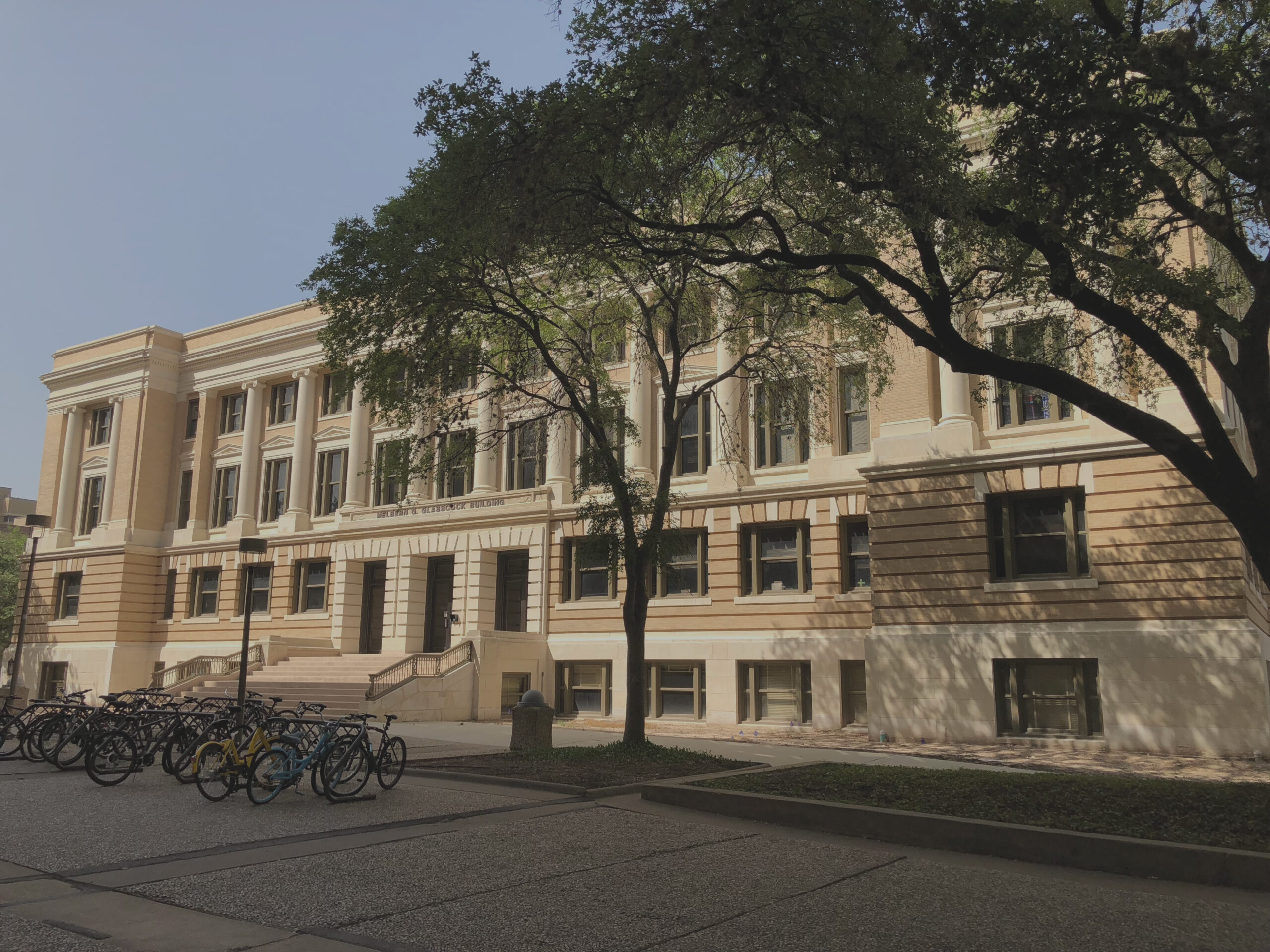
Glasscock Center Library, Room 311, Glasscock Building
Free and open to the public. Refreshments will be served.
KARLA MALLETTE | Associate Professor of Italian and Near Eastern Studies and Associate Director of the Center for Middle Eastern and North African Studies, University of Michigan
Recipient of the Book Prize for European Modernity and the Arab Mediterranean: Toward a New Philology and a Counter-Orientalism (University of Pennsylvania Press, 2010)
“Lingua franca in the Mediterranean”
Karla Mallette, Associate Professor of Italian and Near Eastern Studies and Associate Director of the Center for Middle Eastern and North African Studies at the University of Michigan receives this year's award for her book European Modernity and the Arab Mediterranean: Toward a New Philology and a Counter-Orientalism, published by the University of Pennsylvania Press in 2010. Professor Mallette’s research has focused upon Medieval Mediterranean literature in Italian, Arabic, Latin and upon translation between Greek, Arabic and Latin during the Middle Ages. Her other published works include The Kingdom of Sicily, 1100-1250: A Literary History (University of Pennsylvania Press, 2005) and the forthcoming co-edited volume A Sea of Languages: Literature and Culture in the Pre-modern Mediterranean (University of Toronto Press), as well as numerous articles published in such prestigious journals as PMLA and Romanic Review. Professor Mallette is the recipient of several research awards which include: a Mellon Fellowship, a Visiting Scholar at the American Academy in Rome, two research grants at the American University of Beirut, a Resident Fellowship at the University of California Humanities Research Institute, and a grant at the American Institute for Maghrib studies in Tunis.
Professor Mallette will receive the award and present a lecture on Wednesday, 15 February 2012, at 4 p.m. in the Glasscock Center Library, Room 311 of the Glasscock Building on the campus of Texas A&M University.
About the LectureIn the pre-modern world, the language of literature was nomadic. It was not linked to territory: writers didn’t use a given language because of where they were born; nor did they write in their mother tongue. Rather, the language of literature was learned as part of a broader cultural education. It was a lingua franca: an artificial language that allows people who share no mother tongue to communicate. This talk focuses on the nomad languages of the Mediterranean, especially Greek, Latin and Arabic: the texts and travelers that carried them from one shore to another, and what they had to say to each other when they met.
Related EventBook Prize Outside Reader LectureThursday, 16 February 2012 4 p.m. HOWARD MARCHITELLO | Associate Professor of English, Rutgers University "The Macbeth Bubble" Glasscock Center Library, Room 311, Glasscock Building |
In her book, European Modernity and the Arab Mediterranean: Toward a New Philology and a Counter-Orientalism (University of Pennsylvania Press), Karla Mallette offers an important and timely contribution to our understanding of the history and nature of European modernity and its intimate, if complicated and frequently contested, relationship to the history of the medieval Arab Mediterranean world. Marking a sharp distinction between northern European orientalism (so influentially critiqued by Edward Said and postcolonial critics) and its southern European version practiced by Italian, Spanish, and Maltese scholars in the years between 1850 and 1950, Mallette draws a richly detailed and exemplary study of the scholars and the scholarship that sought to excavate this vital Islam/Arab contribution to the project of modernity largely forgotten (or obscured) for centuries. Mallette’s analysis of the story that these works tell recasts Arab history and Islamic thought, not as the West’s irreducible ‘other,’ but rather as generative forces integral to the very founding of European identity, nation, and modernity itself. Mallette’s narrative is dedicated as well to her analysis of the crucial role modern philology played in this recovery of history and identity. As such, Mallette’s book offers a fresh and exciting new understanding of the place of philology within European intellectual history that necessarily rethinks traditional disciplinary methodologies and the relationship between them. The result is a vigorous and supple multidisciplinary study that allows us to see new aspects of a European history too often taken for granted; that re-introduces us to historical and literary figures we thought we knew but see here, possibly for the first time; and that, by re-theorizing orientalism, enriches our understanding not only of the medieval Mediterranean, but also perhaps our own particular historical moment.
About the Susanne M. Glasscock Humanities Book Prize for Interdisciplinary Scholarship
The Glasscock Book Prize, first awarded in 1999, originated by the Texas A&M Center for Humanities Research, was permanently endowed in December 2000 by Melbern G. Glasscock '59 and his wife Susanne M. Glasscock, for whom the prize is now named.
Submissions for the Fourteenth Annual Book Prize are due by 30 April 2012.
Event Photos
Book Prize Recipient Archive